
About Namibia
Wild enough to inspire. Comfortable enough to thrive.
A country of contrasts, connections and experiences that stay with you.
A country of contrast and beauty.
Namibia offers a rare balance between adventure and accessibility. It feels genuinely different from Europe — with vast open landscapes, incredible wildlife, diverse cultures and the realities of a developing country — but without making everyday life difficult. You can immerse yourself in a new environment, encounter perspectives that challenge your own and experience places far beyond your comfort zone, while still having reliable fibre internet, modern infrastructure, good cafés and restaurants, English as a common language and a similar time zone to Europe. This balance means you can focus on what you came here to do: learn, contribute, explore and grow.
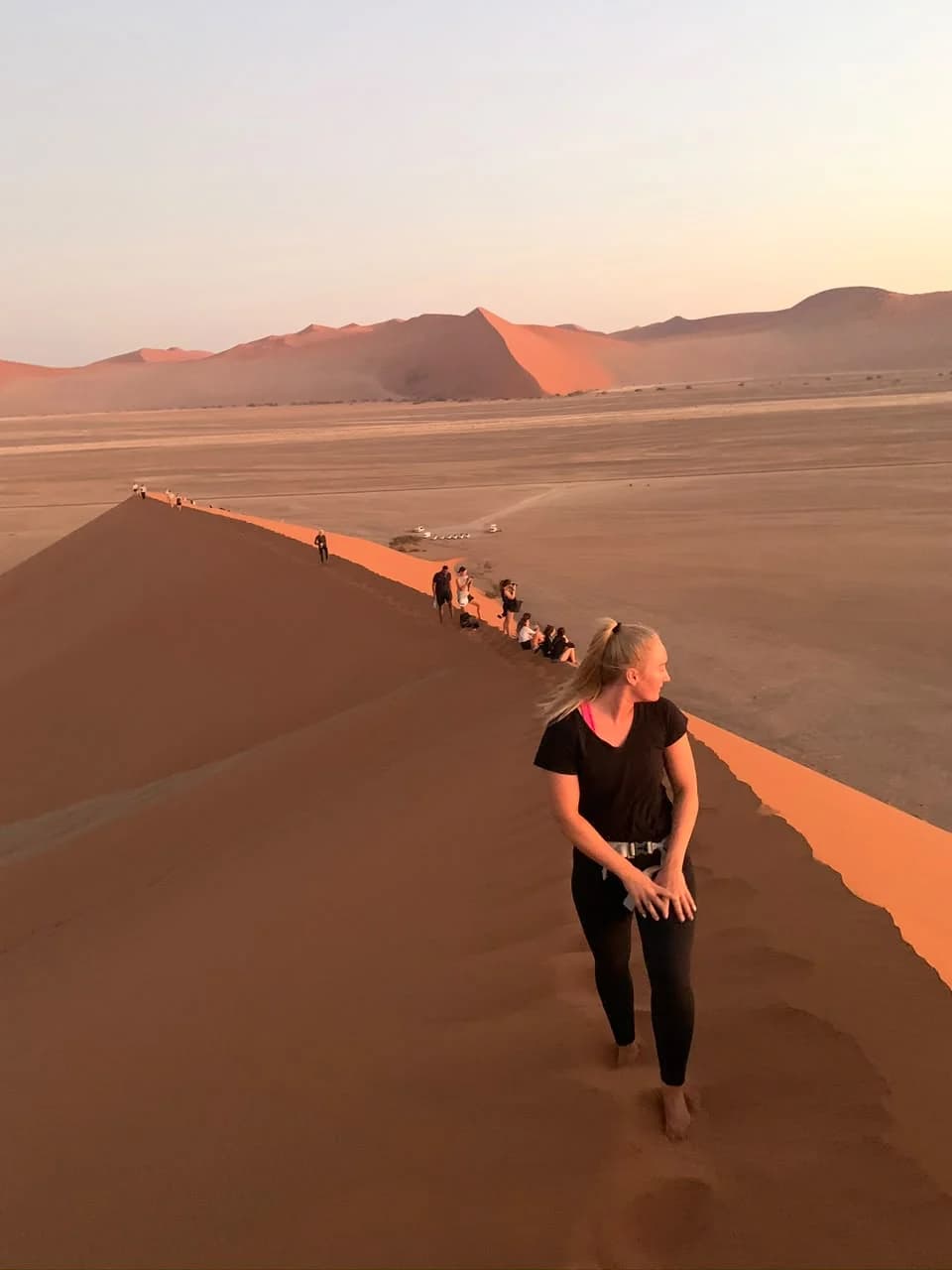
Namibia is a country of remarkable contrasts. One of the least densely populated countries in the world, it is defined by vast open spaces, dramatic landscapes and an extraordinary sense of freedom. From the oldest desert in the world and rugged Atlantic coastline to mountains, savannah and some of Africa’s most spectacular wildlife, the landscape changes constantly — and so does the experience of living here.
Your home base: Windhoek
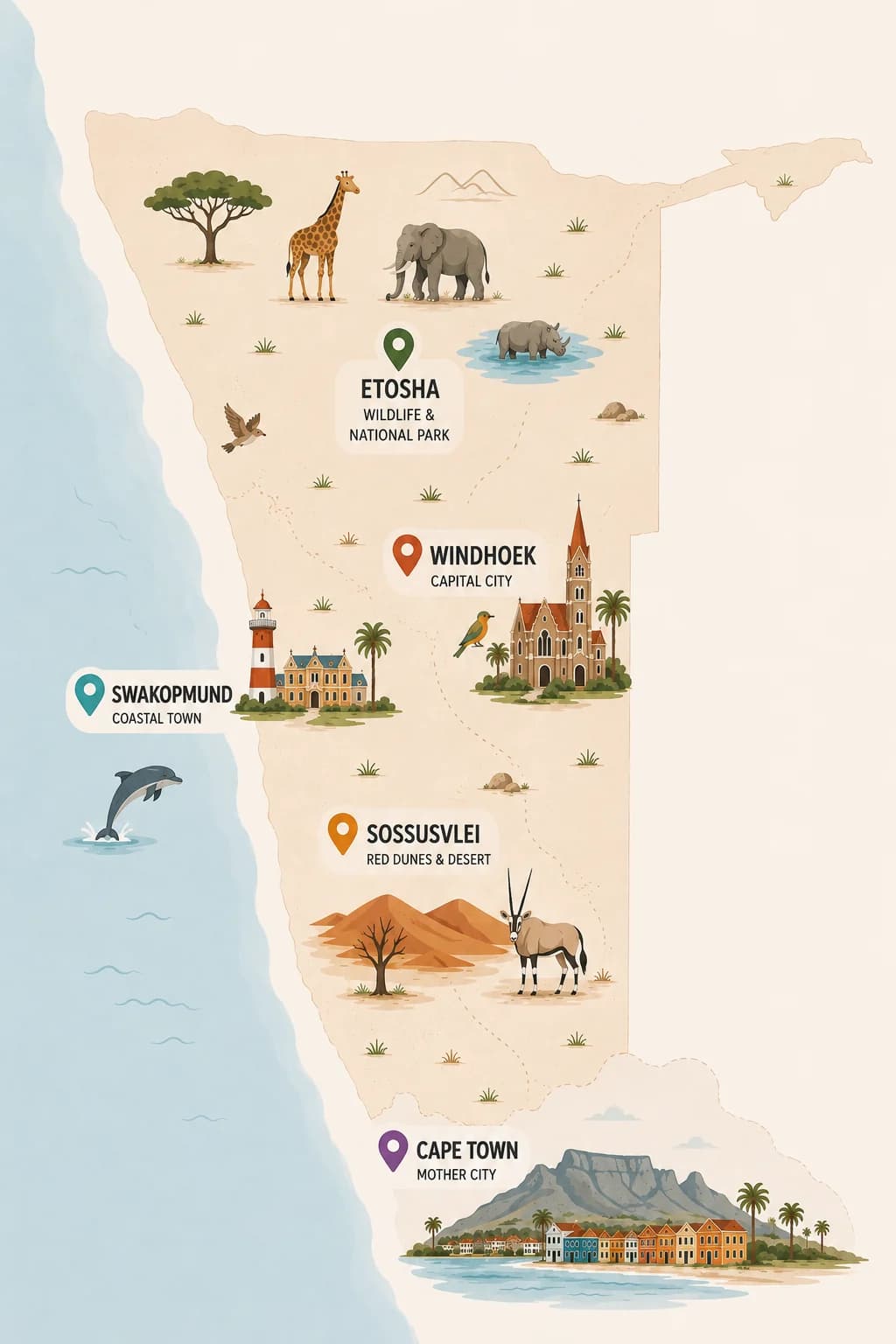
A relaxed, sunny capital with a surprisingly cosmopolitan feel. Windhoek is small enough to navigate easily with little traffic, but offers everything you as a student would need for everyday life — cafés, restaurants, shopping centres, gyms, nightlife, healthcare and modern services. It is also the perfect starting point for exploring the rest of the country.
Getting around
Namibia's public transport is limited and often dedicated to township communities in the city. However there are plenty of taxi services available, with Yango and LEFA being the most common. Namibians drive on the left side of the road and the general road quality between cities is very good, however many of the lesser travelled roads are gravel roads. One can go for walks but only in certain and specific areas with precautions.
Everyday life
Windhoek has a surprising amount of cafés, restaurants, shopping malls, supermarkets, gyms, markets, pharmacies and other little conveniences that make settling in easier. One adjustment for newcomers might be that Windhoek is quite spread out, so cafés, restaurants, shops and other services are not concentrated in one central area.
Connectivity
Reliable fibre Wi-Fi is available in Windhoek and mobile connectivity is widely accessible — so students can stay connected with university, family and friends back home.
Cost of living
Namibia can offer a relatively affordable lifestyle compared with many European destinations, although this varies considerably depending on your lifestyle and what you choose to spend money on. We give students a realistic sense of what everyday expenses look like through budgets shared in the preparations for their journey.
Safety & awareness
As a developing country with one of the largest disparity between rich and poor, it also has its challenges when it comes to safety and crime. However, compared to other African countries Namibia is considered relatively safe. It is however essential to take safety precautions when living and traveling in Namibia. Petty theft and opportunistic crime are common concerns, while more serious crime does occur. One important aspect to take note of is that the safety varies between area to area - within the same city, and day time to night time as well as the specific street within the area. Safety is an important aspect of NamInterns mandate and we ensure that all students have been through a safety briefing before they start their journey.
Climate & seasons
One of Namibia’s great advantages for students: lots of sunshine, dry weather for much of the year and a distinct rainy season. Weather will differentiate largely depending on where in the country you find yourself. Windhoek is known for its sunshine and dry and elevated climate, with cold nights in Winter along the coast you might find yourself experiencing four seasons in a day. Windhoek has two main seasons: summer and winter, with very short transitions as spring and fall. More details will be provided in the brief before arrival.
Healthcare & practical support
Namibia has both public and private healthcare systems, with private healthcare in Windhoek offering access to well-equipped hospitals, clinics and experienced specialists. NamIntern provides a 24/7 support services and assists in any medical emergency. We have trusted practitioners we work with and provide the students with a basic medical aid kit upon arrival.
A country of many cultures
Namibia may look small on the map, but culturally it is incredibly diverse. One of the first things you may notice is just how many different communities, languages, traditions and histories exist within the country. Oshiwambo, Otjiherero, Khoekhoegowab, Afrikaans and English are just some of the languages you will hear, alongside many other languages and cultural influences.
But the differences go far beyond language. Namibia’s different communities have their own histories, traditions, social networks and ways of life. These identities have developed in different parts of the country and continue to influence everyday life today.
For an international student, this can be fascinating to discover because you don’t experience just one Namibian culture. You encounter many.
A diversity you can actually see
One of the most beautiful things about experiencing Namibia as a foreigner is that its cultural diversity is not something you only learn about in a textbook. You can see it as you move through everyday life.
Traditional and culturally distinctive clothing is still an important expression of identity. You may see women wearing the distinctive Herero dress and elaborate headwear, colourful Oshiwambo-inspired patterns, or the vibrant floral prints associated with Damara communities. In different parts of Namibia, you may also encounter traditional ways of dressing and cultural practices that are very different from anything you have experienced before.
The same diversity can be felt in the cities. Windhoek is not simply one central urban environment surrounded by identical neighbourhoods. Different areas have developed their own character, communities and social spaces. Some places naturally bring people from many different backgrounds together, while others have stronger roots in particular communities. Namibia’s history and significant differences in income have also shaped where people live and the social spaces they move through.
As you spend time here, you begin to notice these layers. A place that initially looks like just another part of the city can have a particular cultural history behind it. A conversation may move between several languages. A social gathering may bring together people from backgrounds that, at first, you would never have thought to connect.
A diversity you gradually learn to recognise
You won’t understand all of Namibia’s cultural nuances in three months—and you aren’t expected to. But three months is long enough to start seeing patterns that you simply cannot see when you first arrive.
At first, you may just notice that people speak different languages or dress differently. Gradually, you begin to recognise the subtler differences: different social circles, traditions, ways of communicating and ways of relating to one another. You also become more aware of the history and sometimes the tensions that exist between different communities.
At the same time, one thing many foreigners experience is how welcoming Namibians can be. Across different communities, you will often encounter a genuine openness towards visitors and an interest in getting to know people from elsewhere.
This is part of what makes living in Namibia so interesting. You don’t come here to become an expert on every Namibian culture. You come here to live alongside them—to be curious, to ask questions, to observe, and gradually to see things that you couldn’t see when you first arrived.
The longer you stay, the more you realise that Namibia isn’t one culture. It’s many cultures living alongside each other—and discovering those layers can become one of the most rewarding parts of your experience.
Social Life
Namibia is meant to be experienced together.
One of the most unexpected parts of living in Namibia is how quickly your social circle can grow. Through your placement, you’ll meet Namibian colleagues and local students, as well as other international students and interns. Your accommodation brings another group of people into your life — from fellow travellers to the people who work there — while guides and local hosts often become much more than people you simply meet along the way. They may end up showing you their favourite places, introducing you to friends or giving you a completely different perspective on Windhoek.
And then there is everyday life in the city. Windhoek may be small, but there is always something happening. Tuesday karaoke nights are a student favourite, while live music, concerts, festivals, art exhibitions and markets create plenty of opportunities to meet people. The Sunday Village Market brings together food and live music, while Saturday’s organic market is a popular weekend stop. NamIntern also creates opportunities to connect, from our weekly mentor lunch to our monthly taco night, and we regularly share upcoming events and activities with students so they know what’s happening around Windhoek.
Going out is also a big part of social life. Cafés and restaurants are plentiful, and eating out can be surprisingly affordable. Many students find that the difference between preparing a meal themselves and getting takeaway or eating out is smaller than they expected, making spontaneous dinners with friends an easy part of everyday life. For something different, there is also cinema, go-karting, sports events and plenty of other activities to discover.
And you don’t have to go far to get outdoors. Windhoek is surrounded by mountains and open spaces, with hiking trails, Avis Dam and other nearby spots just a short drive from the city. It’s easy to finish a day with a walk in nature or find a quiet place to watch the sunset — and Windhoek’s spectacular sunsets are something students quickly come to love.
The social side of Namibia isn’t just about going out.
It’s about the people you meet along the way — the colleague who invites you for a braai, the student you meet at a market, the traveller you end up sharing a road trip with, the guide who shows you a side of Namibia you wouldn’t have found yourself, or the people you simply happen to sit next to over lunch.
There is a famous saying in Namibia: “You can leave Namibia, but Namibia will never leave you”
Your journey starts with a conversation.
Tell us what you have in mind. We will help you find the right fit.
Get in touch